

Two weeks ago PSV played away in Utrecht. A friend of mine lives there, close to Amsterdam, so the trip doubled as a reason to see him and find out who’d take the points home. There was one problem: the stadium isn’t near the train station, and it was going to rain all morning.
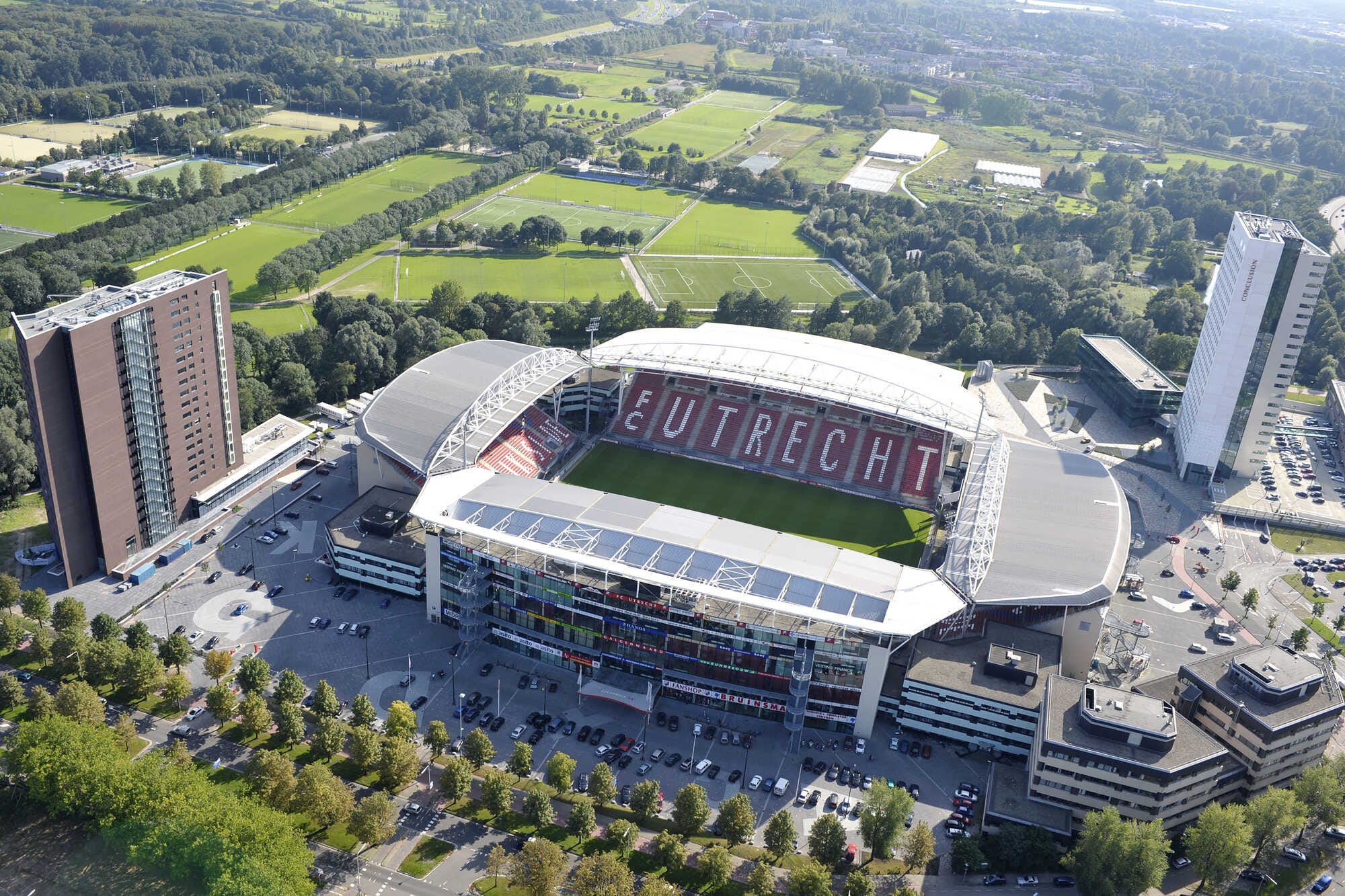
Getting there took four tries
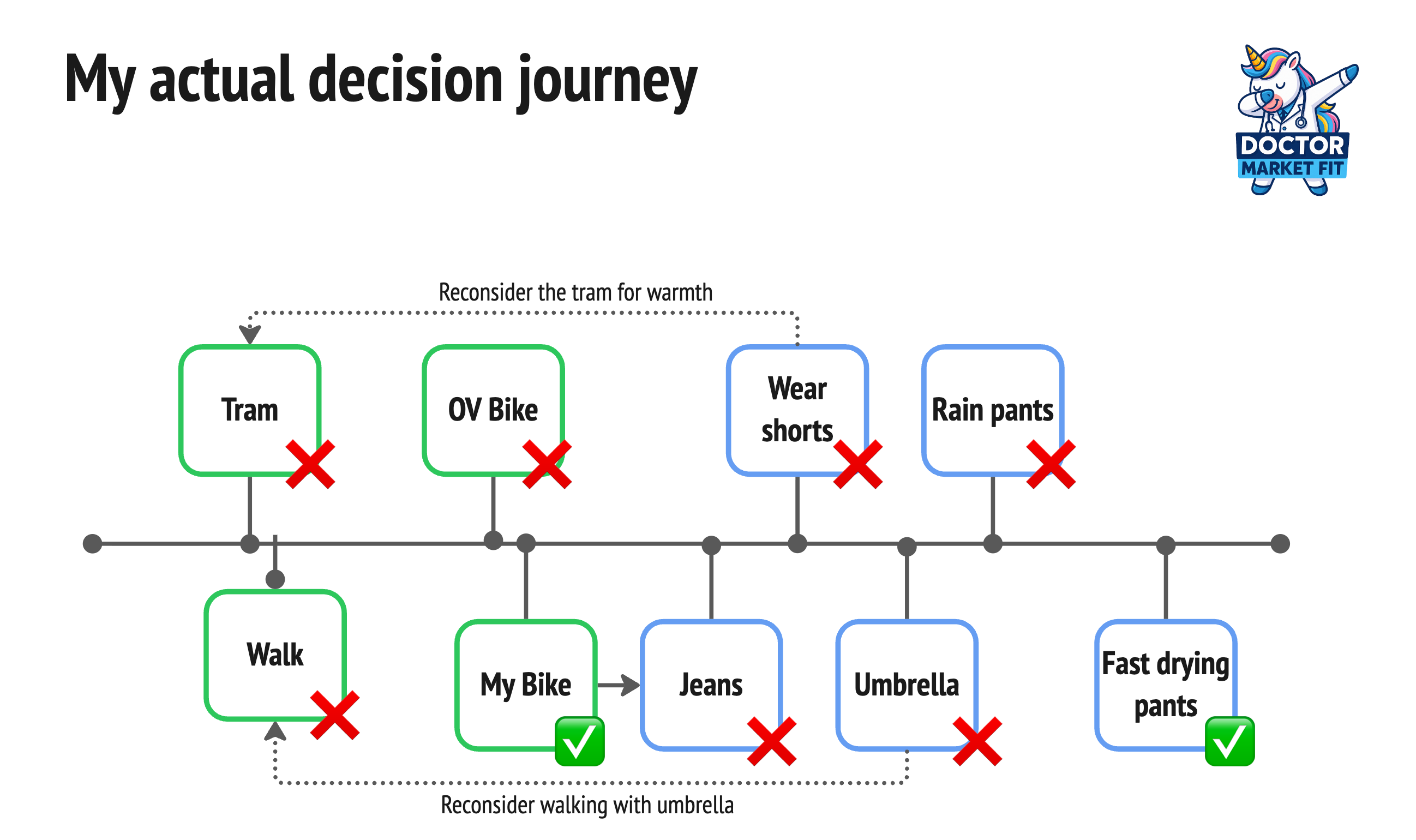
Walking would take 45 minutes. Fine on paper, except it was an early kickoff and I wasn’t setting an alarm on a Saturday for that. A tram, then. Except I’ve learned from other stadiums that trams on game days get packed: pressed against the glass, watching two full ones pass before you squeeze onto a third. No thank you.
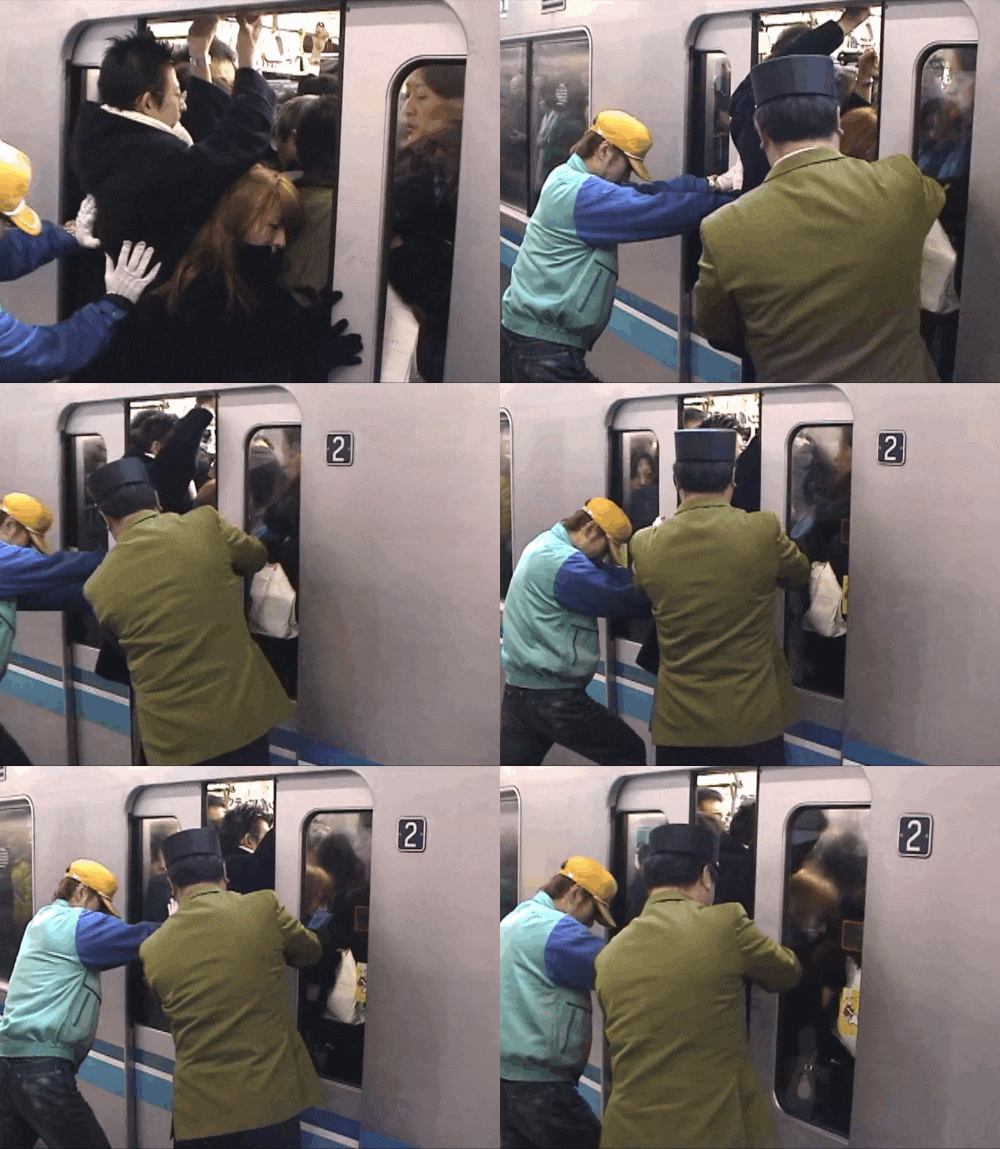
So, a bike. I don’t own one in Utrecht, but Dutch Railways rents them out at most major stations for a few euros a day, an OV-fiets. Neat system, except on a busy Saturday they’re often all gone. I’ve shown up empty-handed before, at a festival near Amersfoort, and we were lucky to grab the last two bikes on the rack. Showing up to a rental with nothing left just puts me back on the tram, which I’d already ruled out.
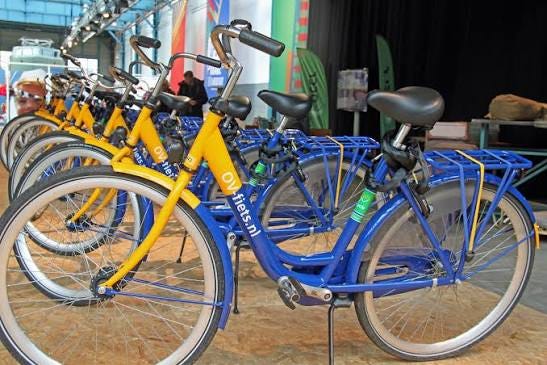
So I brought my own bike on the train instead. Eight euros, more than the OV-fiets, and I could just get on and go without gambling on availability. Problem solved, my fourth option in, and I hadn’t even gotten to the actual problem yet.
Staying dry took five more
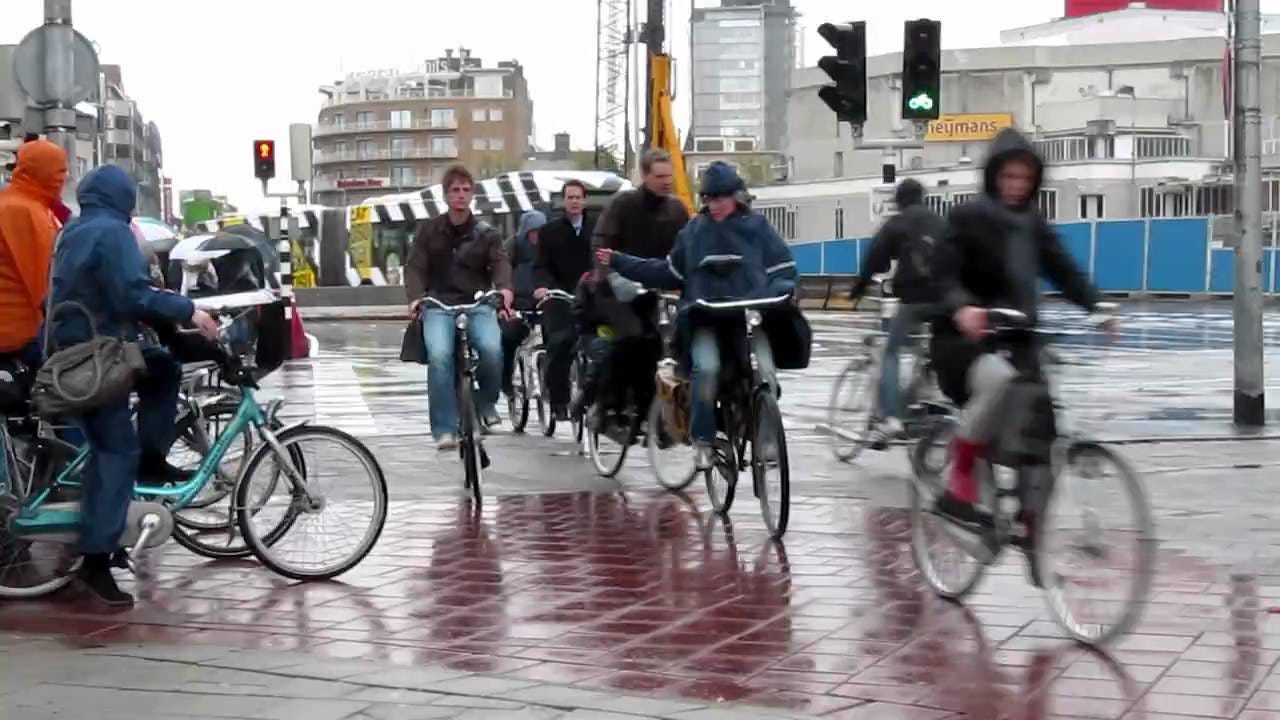
The forecast had rain lasting exactly as long as it takes a referee to blow the opening whistle. My jacket would keep my top half dry. My legs were a different question, and wet jeans are a special kind of miserable: they don’t dry for hours, and a match doesn’t stop because your pants are wet.
An umbrella seemed obvious. It wasn’t forecast to be too windy, and any Dutch person, myself included, can supposedly cycle one-handed. Except stadiums don’t let you bring umbrellas in, officially because they can be used as a weapon, and Dutch football has had a real hooliganism problem for decades. I’d have shown up, been turned away at the gate, and lost it. I’d put the odds at 98 percent.
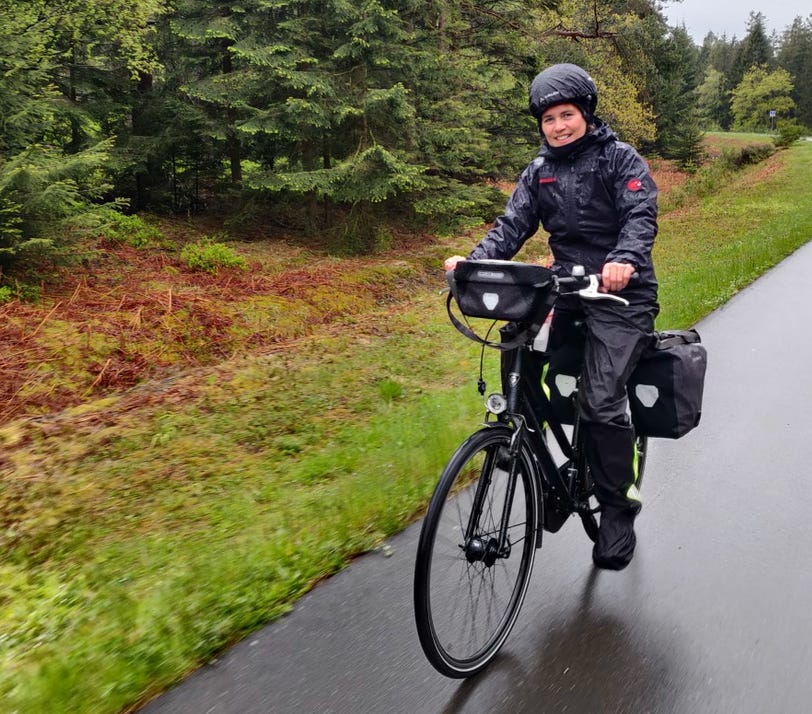
A rain suit would have solved it properly. It’s basically a rain jacket for your legs, and it beats every other option here on pure performance. Almost nobody wears one anyway, because it’s sandals-in-socks on steroids. I don’t even own one. I’d rather be wet than commit that fashion crime. If you look at common rainy days in the Netherlands, I believe that at best a few people wear a rain suit.
Shorts were out too; roughly 17 degrees is too cold for that. Then I remembered I’d bought a pair of thin, fast-drying pants for flights and hot weather. A few minutes of drizzle and they’re dry again in about ten. That was the one.
Okay, Jeroen. This is getting unbearable to read. Why does any of this matter to a founder?
It’s more than just two decisions
Now, the reveal of this piece is not that a rain suit’s real rival isn’t a better rain suit. Yes, it’s an umbrella, or a pair of pants that were never designed for rain at all. An OV-fiets isn’t competing with a better bike rental; it’s competing with a tram I’d already decided I hated. This is the common JTBD trope you may know.
Here’s the part that matters more, though. I wasn’t choosing transport and then separately choosing rainwear. Take the tram instead of the bike, and I barely need the dry-pants solution at all, because I’m not cycling through rain for twenty minutes. Take the bike, and the rainwear decision suddenly carries a lot more weight.
Four transport options and five rainwear options isn’t nine choices; it’s twenty possible combinations, and I couldn’t tell you exactly how many I ran through, but it was at least half of them.
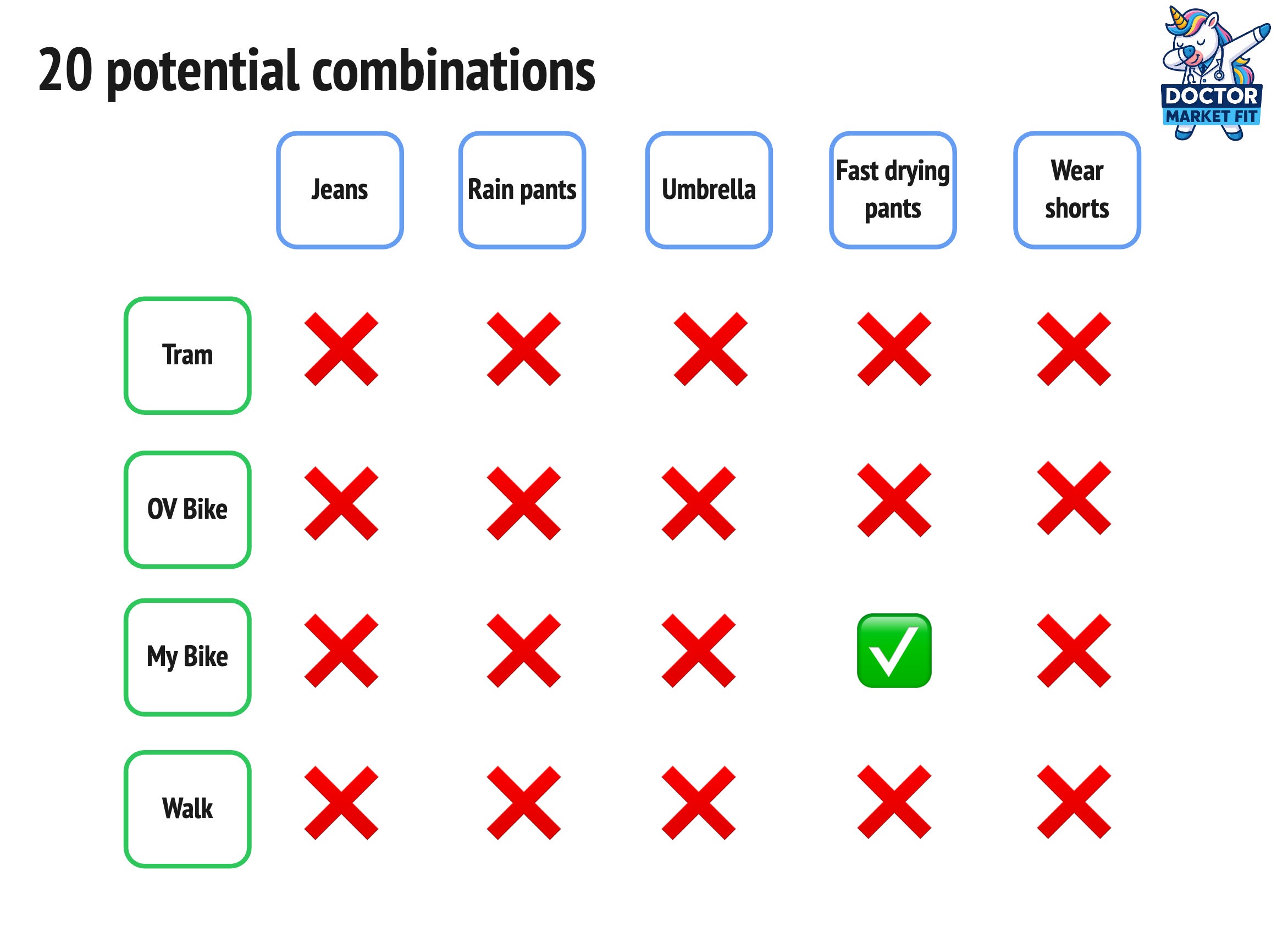
The Rain Suit Problem
Customers don’t always pick a solo product. They pick a product plus whatever else it has to work alongside, and that combination is what actually gets compared. That is what I call the Rain Suit problem.
The rain suit problem: your product can win the narrow comparison and still lose, because the customer isn’t buying it for the narrow job. They’re buying it into a whole situation, and it has to survive every constraint in that situation, including the ones that have nothing to do with performance.
Too many options isn’t usually the problem
There’s a well-known finding that too many options make people freeze. It’s also mostly been debunked. A meta-analysis on choice overload found it really only kicks in under specific conditions:
When the options are hard to tell apart
When the decision itself is genuinely difficult
When you’re not sure what you even want
When you’re just trying to minimise effort instead of finding the best answer.
None of that applied to me. I knew exactly what I hated, wet jeans and looking ridiculous, and exactly what I valued, showing up on time and not gambling on bike availability, so twenty combinations collapsed fast.
Your first-time customer usually doesn’t have that. They don’t know their own preferences yet, which is exactly when a big combination space stops being interesting and starts being paralysing. You need to make it easy for them to buy you.
The harder competitive map
When you map your competition, you’re probably listing the other companies that look like you. That’s the easy half. The harder half is mapping the combinations your customer is actually running through, and noticing which of your assumptions that they’ll pick you standalone, that they already know what they want, that the decision is simple only hold for customers who’ve bought something like this before.
You may find out that your happiest customers use your solution in combination with something else. Do you know what other tools they are using in conjunction with yours? That’s something to find out in your next customer calls.
And for sales calls: what does the twenty-option version of your customer’s decision actually look like, and how many of those combinations have you never once considered?