

Last week, I kicked off with a founder in maritime tech. Two hours in, at the very end of the session, she said something that surprised me: “You got me out of my groove.”
I thought to myself, what a weird thing to thank someone for. Let’s unpack.
Merging vision and roadmap
So I asked her: out of what groove, exactly? ‘My vision’, she said.
I’d challenged her a little before that. She used the word vision five times in five minutes: ‘I know my vision is clear!’, over and over. Each time, I heard two different things bundled into one word.
A vision is an abstract endpoint. A world without plastic, that kind of thing. Hers was a world with safer ships, and she had a genuine insight into how to get there. That part was clear. The problem was what she’d attached to it.
The common reflex, once you’ve got a real insight, is to immediately start detailing it into a full product portfolio, and then call the whole bundle ‘vision.’ She admitted she does exactly that.
Her default mode is to design the whole product fully. As a result, she had quite an elaborate first ‘prototype’, and in her head, that prototype and her insight were the same thing.
Her cofounder had already told her not to develop it further, as twelve months of building with zero market validation is too risky. She knew this. Knowing it hadn’t unstuck her.
Most founders overcomplicate their roadmap
Many founders do this. They’ve got a five-year endpoint in their heads, but they mistake it for their roadmap.
It becomes a product portfolio with either six complicated products, or a piece of software with twenty-five ‘core’ features. Then, they plot these over a five-year roadmap. Most startups don’t work on multiple products in the initial years.
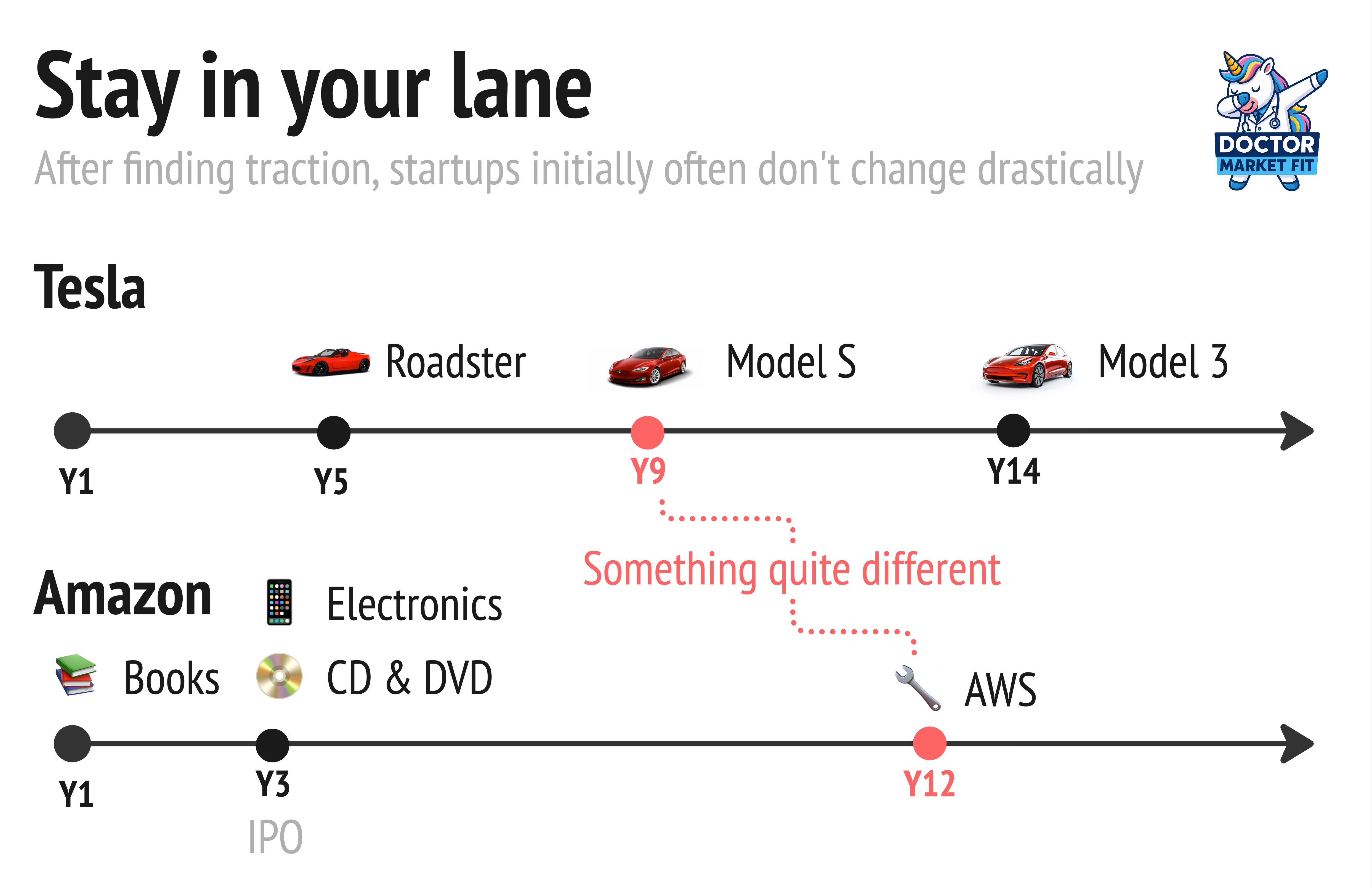
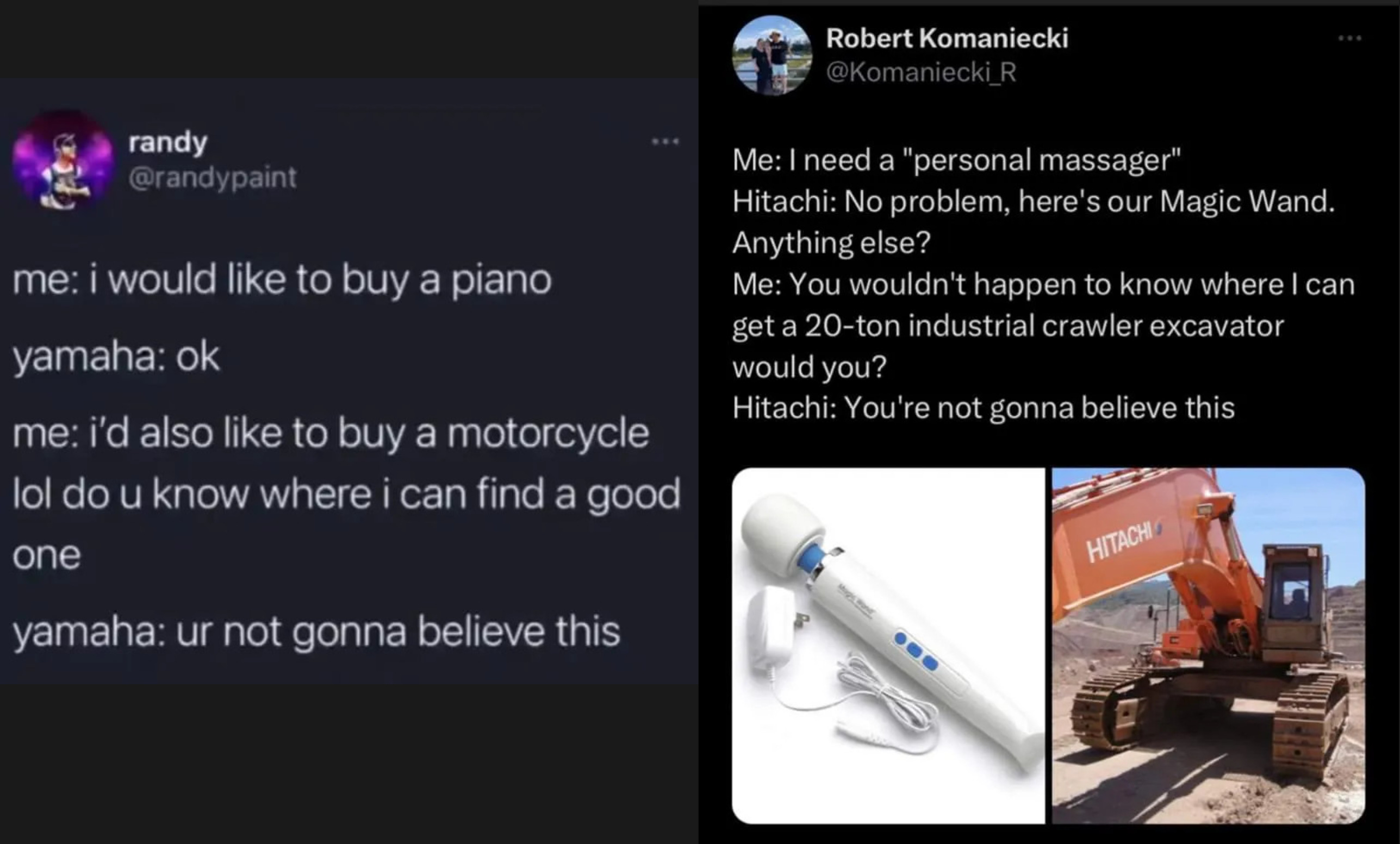
Even the companies famous for sprawling started narrow. Tesla’s only car was the Roadster for years five to nine. Amazon spent its first three years on just books, IPO’d on just that, and added CDs and DVDs the following year, electronics not long after. Expansion strategies are best kept simple. Yet most founders don’t do that. They think they’re Yamaha or Hitachi.
You cannot fully design a startup upfront
That temporally plotted vision is a horrible roadmap and doesn’t help with your GTM. A working waved GTM strategy isn’t something you can design upfront, like an architect designs a building. There’s a key difference.
An architect can design the whole thing upfront, because they can survey the ground first, and it turns out to be stable. Once you know the foundation holds, you design the full building and construct it exactly as drawn.
The market is a swamp
People apply that same thinking to a startup. But the ground you’re building on is the market, and the market is a swamp.
Every time you ship something small, people react, and the ground shifts under you. You don’t get to survey it once and build forever.
You drain the swamp by interacting with it, one step at a time, until you find a spot solid enough to lay a single brick. That comes long before you design the entire building. You only get to design your startup like a building once you’ve actually got a solid foundation under you. Which often is year three, not year one.
Back to the brick
Once she saw the problem, her grip on ‘vision’ loosened. At the start of the session she told me she wanted a roadmap, the whole plan mapped out. By the end, she was fine knowing just what to do for one week. She just needed the one brick.
She’d already built a platform that makes ship safety both safer and cheaper, which is rare, since most safety features just cost money and nobody wants to pay for them. She’d run three pilots with it. Corporate loved it. The people actually on the ships? Not so much, and that gap was the clue.
So that’s where we went looking. The pilots had one thing in common that worked with the crews, not just the buyers. We built a next step around that piece: a sales deck, pitched to new potential customers who’d hit the same friction. That’s the work for next month. The grand design can wait until we have better data.
Successful GTMs are built brick by brick
She walked in circling her vision like a broken record. She walked out with a next step small enough to actually take this week.
If you’re pre-revenue and you’ve fused your five-year vision with a fully designed roadmap, stop. Separate the two. Then go find the one brick you can lay this week instead.
More reading
Need my personal help? Get in contact!
Pony tier sold out due to high demand 🔥
Only two Horsey tiers left 🔥