

You’ve probably seen the meme: Prince (Now King) Charles and Ozzy Osbourne have the exact same persona. Male, born in 1948, raised in the UK, married twice, lives in a castle, wealthy and famous. I agree with the point.
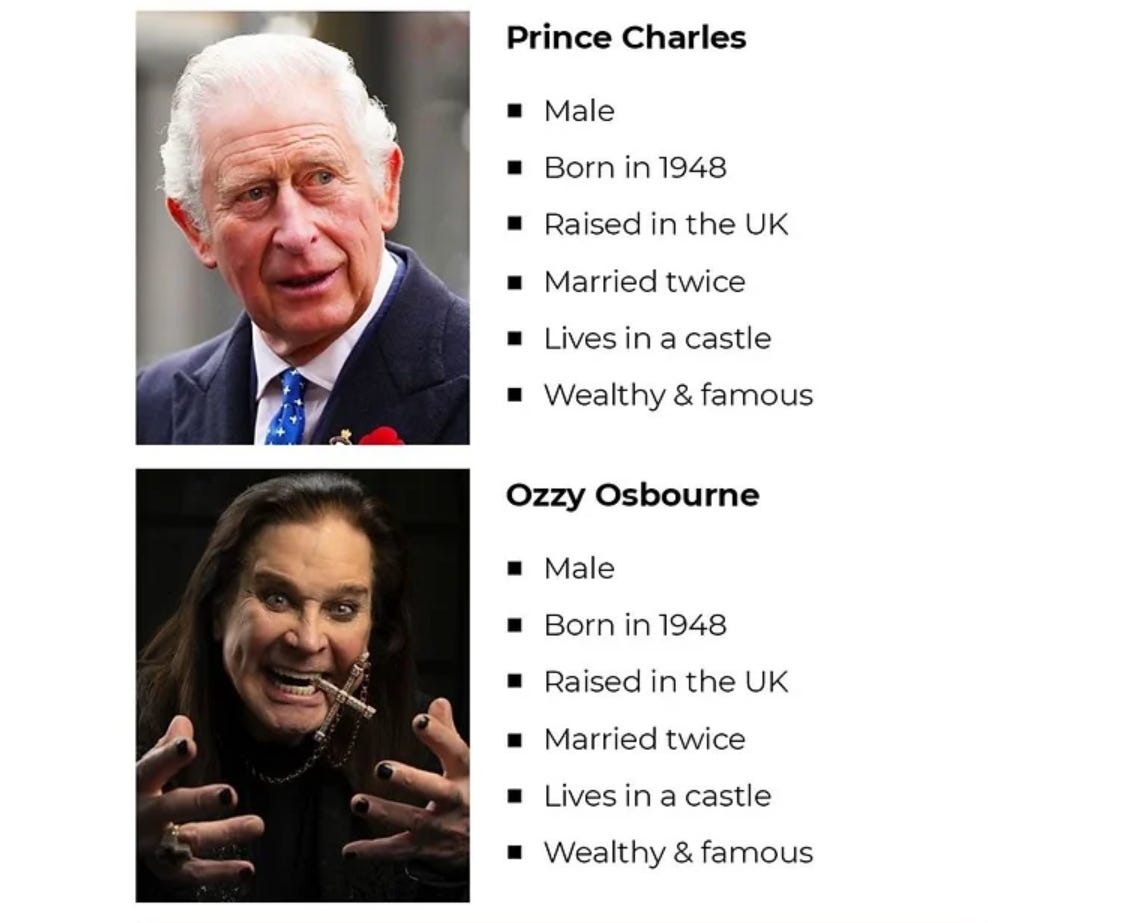
Not only because they are inaccurate, personas often lead to stagnation because they are not marketable (thanks, Anthony!). You have nothing to go by and nothing that predicts sales.
Personas optimise for imagination, not sales
Why are they so terrible? Because we segment our market to optimise for sales. Can you think of a single product where these aspects matter? Male, post-war baby, UK, married twice, lives in a castle, rich? Nothing comes to mind.
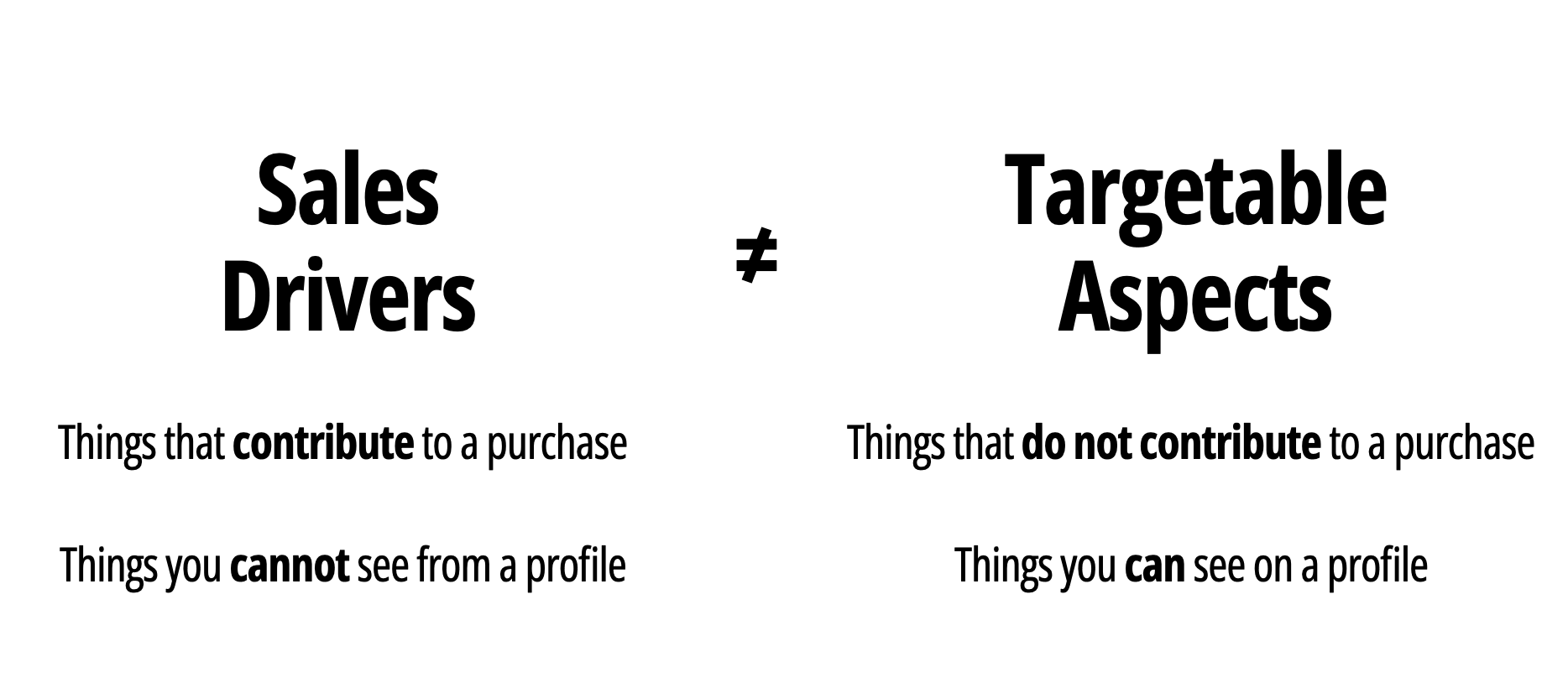
Being born in 1948 never sold anything
That’s because these are targetable aspects, not sales drivers. Being born in 1948 doesn’t cause a sale. Having arthritis in your late seventies does. Targetable aspects are related to the sale, but only very distantly.
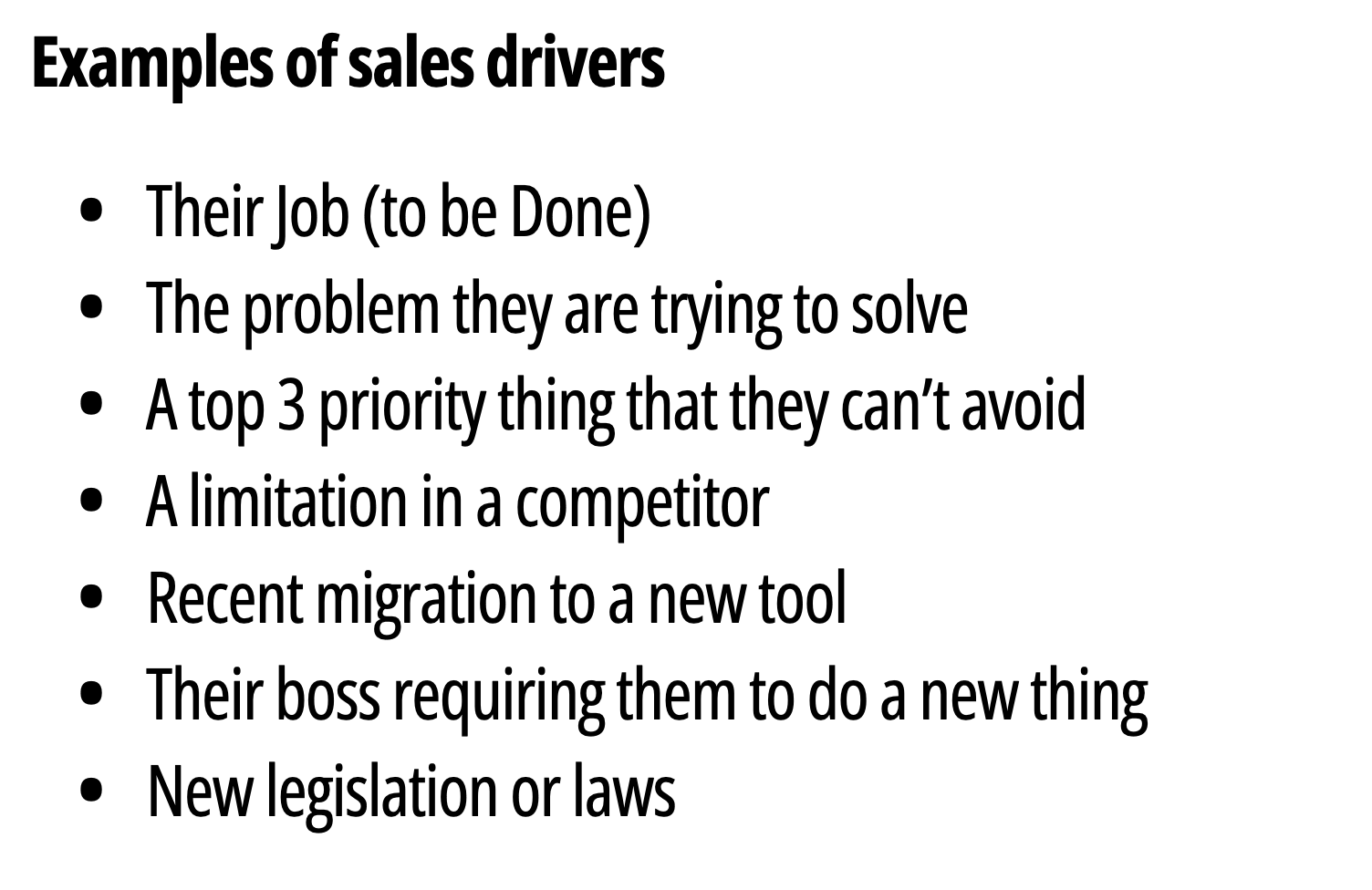
What actually makes people buy
So what does increase the likelihood of a sale?
The Job to be Done: the problem they’re trying to solve.
That problem is in their top 3 priorities (thanks, Rob Snyder!).
The alternatives they use today have flaws.
They were recently dropped into a new situation: a migration, a new boss asking for something outside their skillset, or a new law that requires reporting.
I hope you can feel it in your tummy that these are closer to a sale. It won’t be home run after home run, but I’d bet my money on these correlating with purchases far more than a birth year.
Your segment should imply a product category
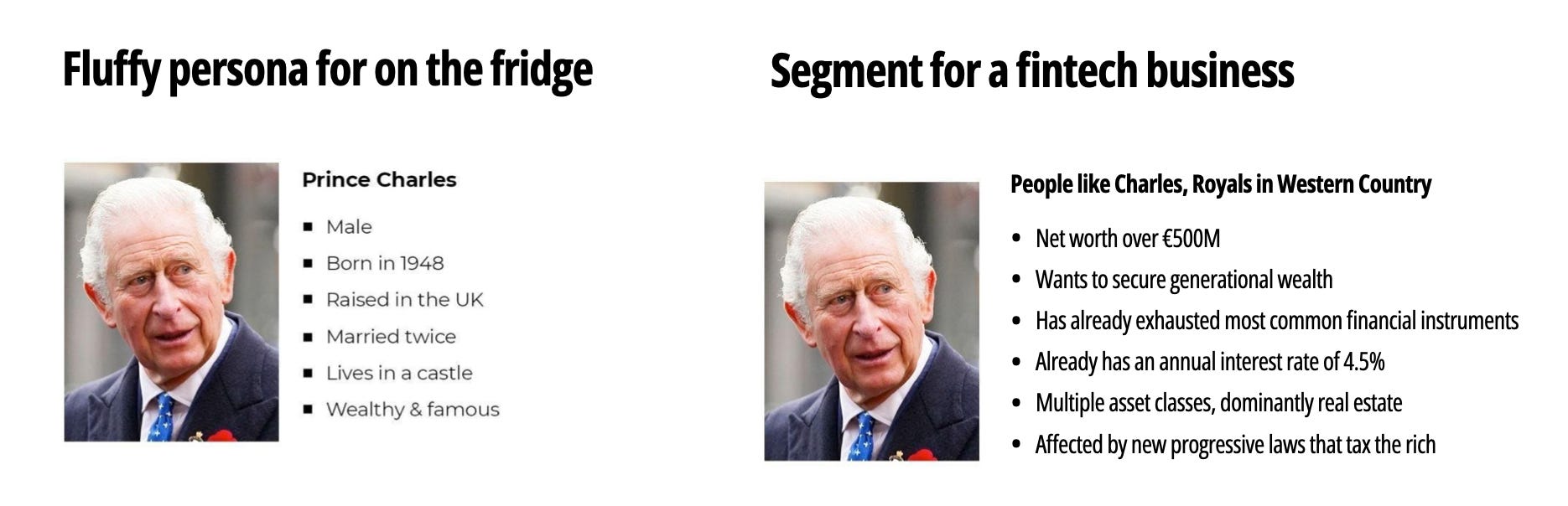
Compare these two. Which one evokes a product category? I’d argue: the right one. To me, it screams some kind of financial product that helps people like Charles grow their wealth even more.
If yours looks like the one on the left, put it on the fridge, right next to your kid’s drawing that you swore belongs in a museum. Your segment should read like the one on the right:
The stuff that sells can’t be filtered on
Here’s why segmentation is hard: you can’t filter those drivers in LinkedIn Sales Navigator. There’s no dropdown for “has already exhausted most common financial instruments.” Same for me: I need to find founders with GTM and PMF issues. I can’t find those directly on LinkedIn.
Target the proxy, qualify the driver
But I do know that these problems usually show up in the first 2–3 years of a startup. By trial and error, I’ve noticed that almost all founders who hire me are within their first 2 years, sometimes 3. That I can target on.
But being in year 2 doesn’t mean they have these sales drivers. It just increases the chance. So I still need to hop on calls to check: are the sales drivers actually there?
Conclusion: find the drivers and resegment
Targetable aspects are fine for finding people. I use them myself. But they’re not your segment. Your segment is the stuff in the right column, and you only find that out by getting on calls.
So be honest: does your ICP doc look like the left or the right? If it’s the left, here’s how to fix it:
List your “hell yes” customers.
Call them. Ask what made them buy, and why then.
Look for what they have in common: both the drivers (right column) and the targetable aspects (left column).
Resegment: describe your segment by its drivers, and use the targetable aspects to find more of them.
Free sanity check on your segmentation
Not sure if your segment is right? Book a free intake with the doctor. Answer a few short questions and I’ll reach out.