When deciding on a person, it’s either “hell yeah!” or “no”. Meh doesn’t work well for hiring someone you want to have faith in, especially for early employees
Pay peanuts, get monkeys. Sometimes, I meet founders that have a nephew to do marketing, and this startup is their first marketing gig. Work takes forever and is of mediocre quality. Sure, it’s cheap, but better get someone with some professional experience.
Don’t hire employees too early. If you need help with marketing, spending $15k might sound expensive, but hiring somebody that works 6 months for that might not get you the best marketeers. In a startup, slow mediocre work is costly too.
Don’t hire sales people before you have figured out sales yourself. You barely udnerstand what value you provide, let alone a newcomer. Founder led sales is the way (at least for B2B, but also applies to B2C).
When getting employees or a new co-founder, always do a test period. Never jump in straight away. Clearly communicate what you want to see within which timespan. In the US, you may even get away with ‘hire fast, fire fast’, in Europe certain laws protect employees. Make sure you understand those.
Vibes are important, but output is why we are here. This ain’t no charity or a hobby. You are building a business. That means that sometimes you might need to fire a friend that doesn’t deliver. It’s hard, but better for the business. If they are an adult about it, they will understand that incentives are misaligned.
Hire complimentary on skillset but focus on overlapping values, especially for co-founders. If your core startup is about sustainability, you will run into conflict with people that don’t support that mission. DuoLingo’s founder at some point realised he hired a bunch fo activists that didn’t want to make any money.
People can learn on the job, but it always takes longer than you expect. That new skill often isn’t learned in 1 to 2 months but in 6 to 12 to become effective. Do you have time for that? Also, most people have an average learning speed (by definition). They might falsely overpromise their skill boost. Ask them for past learning curves to gauge this, i.e. ‘I taught myself MySQL queries to run statistical analysis within 2 months’
Getting interns sounds like a moneysaver, but this likely will cost you. 8 out of 10 interns (my gutfeel) are students for a reason. Their output is a fraction of a professional, and you will spend more time in teaching them than to get output. It’s fine if you want to make that trade-off, but ‘an intern will do the marketing’ has failed more often than it has succeeded. The amount of really talented interns is just low.
Accept that fact that you haven’t hired anyone before. The fact that you might be good with people doesn’t make you great at hiring. Hiring is a skill and it’s incredibly hard. There aren’t great proxies for later peformance in interviews. However, you can read up on what others have learned about hiring. There are people that write books on it, you know, that can provide you scaffolding.
Many founders are not as good with communicating expectations as they think they are. Whether it’s a freelancer or a new employee’s responsibilities, take time to write it down, show it to them and ask: explain it back to me (in nicer words). Make sure you are on the same page.
If you are looking for a freelancer, it can be quite challenging to find a good one. Often you are hiring an expert because you are not the expert. So, what should you look out for in finding a good accountant? Don’t just ask your fellow entrepreneurs for recommendations, ask for what they like about this accountant. This will give you parameters to take into account when evaluating accountants.
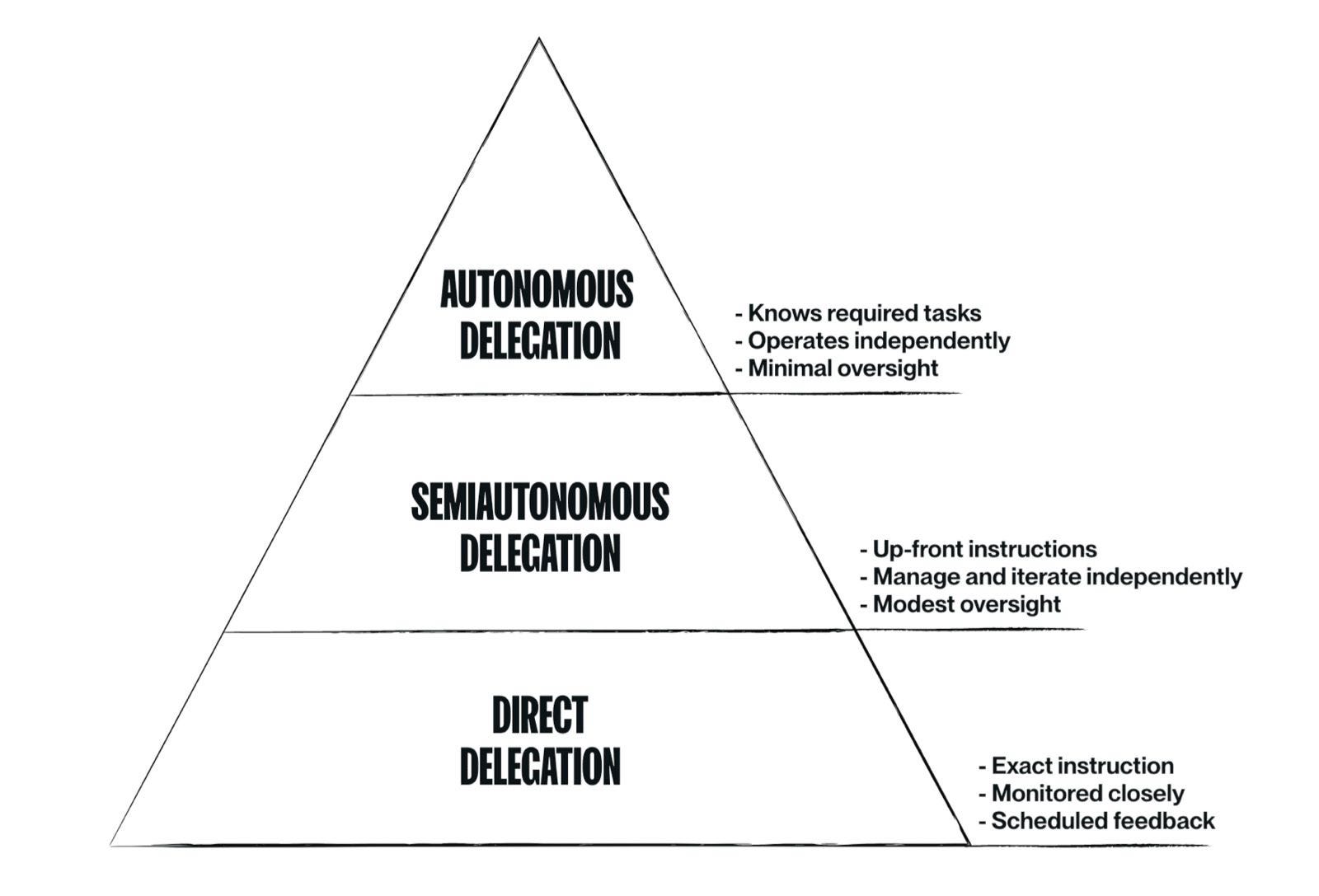
When hiring, ask yourself how much autonomy people should have. Sometimes you need people that can very effectively process a lot of predifined tasks, sometimes you need people that can work with vague problems. Mismatching these two can lead to horrible results. Hiring a developer to set up dev ops that’s not autonomous will give you headaches, hiring a marketeer who doesn’t take the lead on GTM leaves you stalled. Similarly, hiring an autonomous person on basic tasks results in a bore-out (see pyramid).